

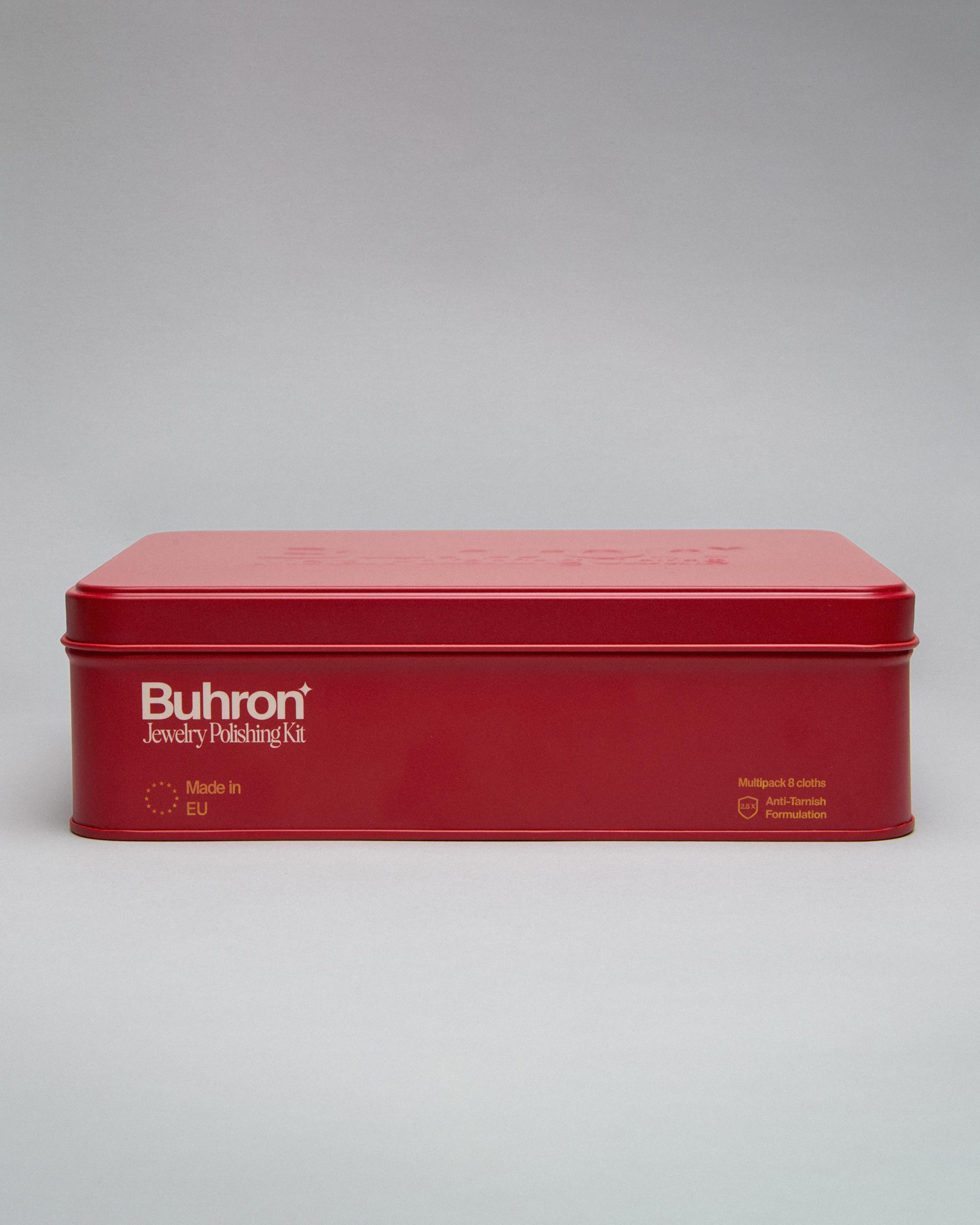
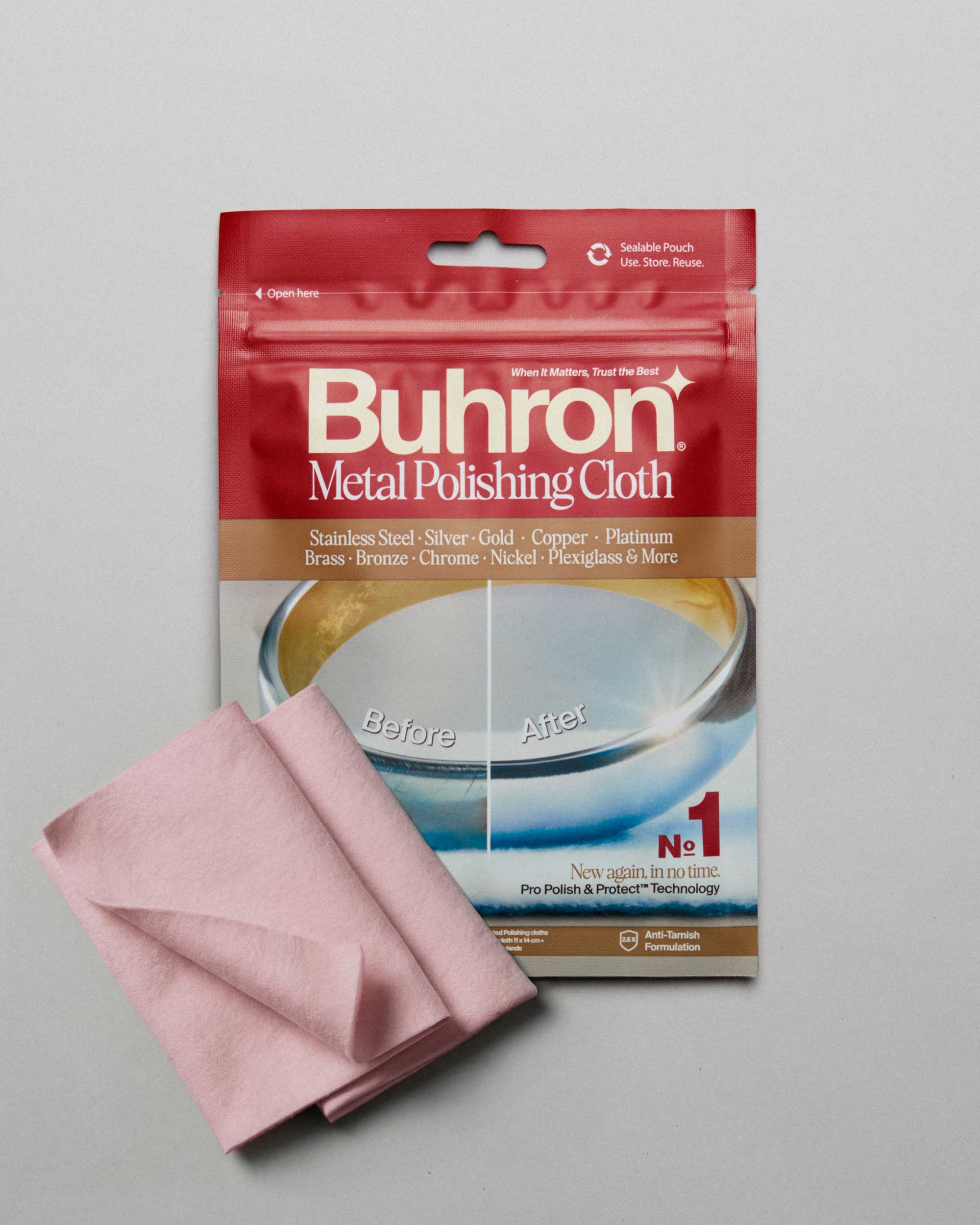
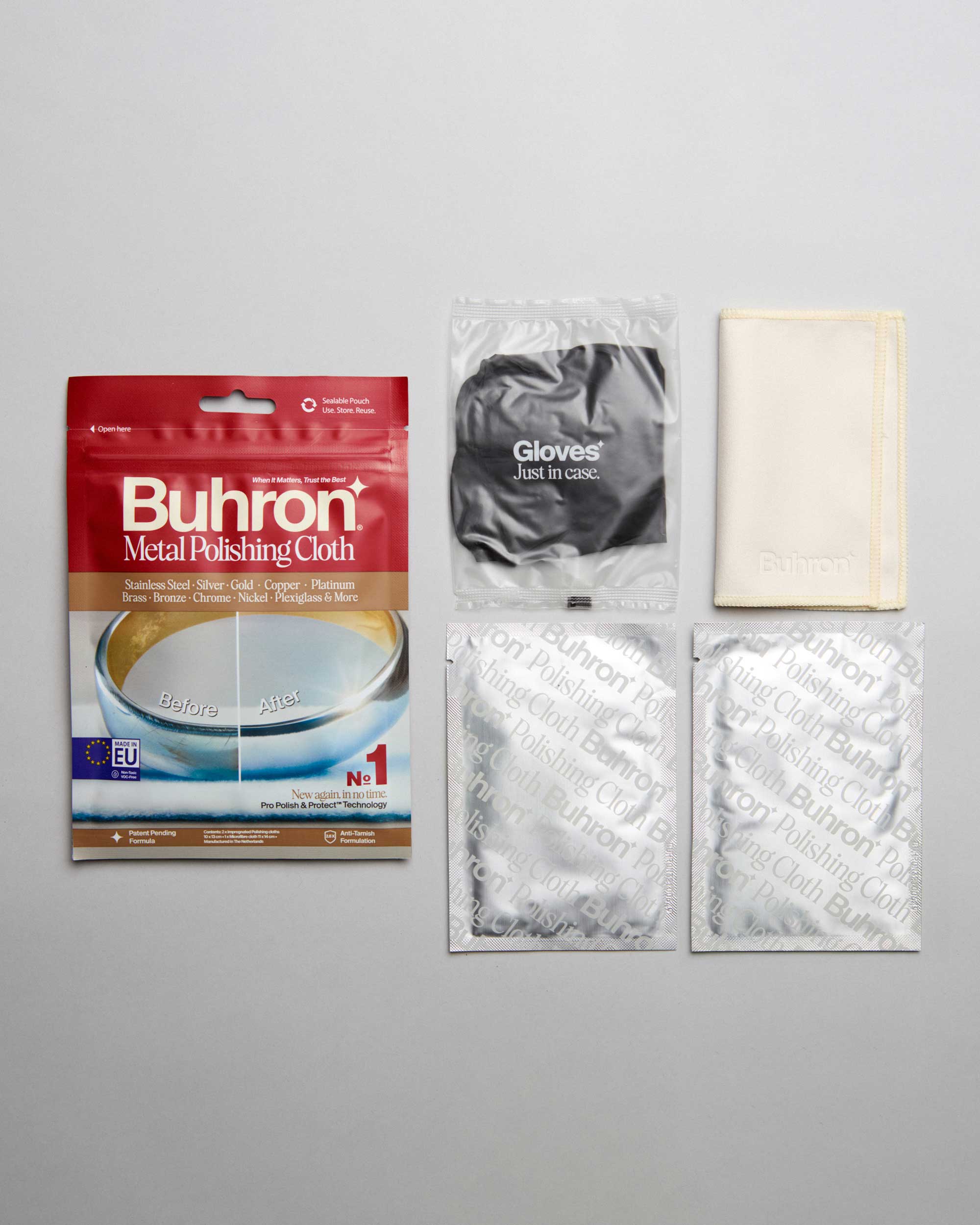


Polishing cloth
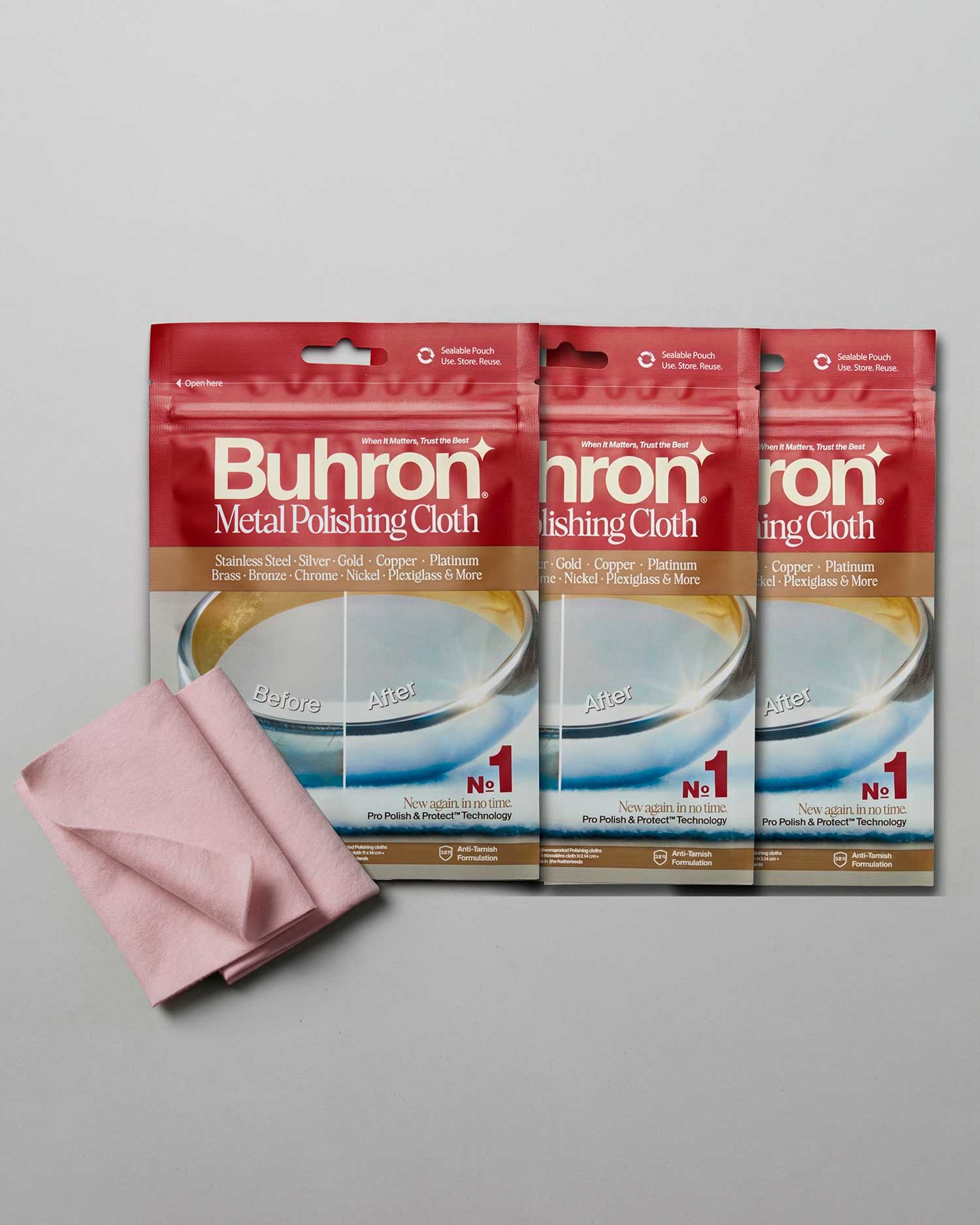
On polished metals such as silver, gold, stainless steel, brass, copper, platinum, bronze, thick chrome, nickel, and more. The one rule: it's for polished, mirror-finish surfaces only. Not for brushed or satin finishes, Polishing those would remove the texture.
Most jewellery polishing cloths were built for one thing: tarnish removal. They work as a basic silver tarnish remover and do that reasonably well. What they don't do, and what Buhron does, is remove fine surface scratches from silver and gold and restore the mirror finish. That's the gap the category has never properly closed. The formulation took five years to develop because doing both at once, safely, without harsh chemistry, is genuinely difficult.
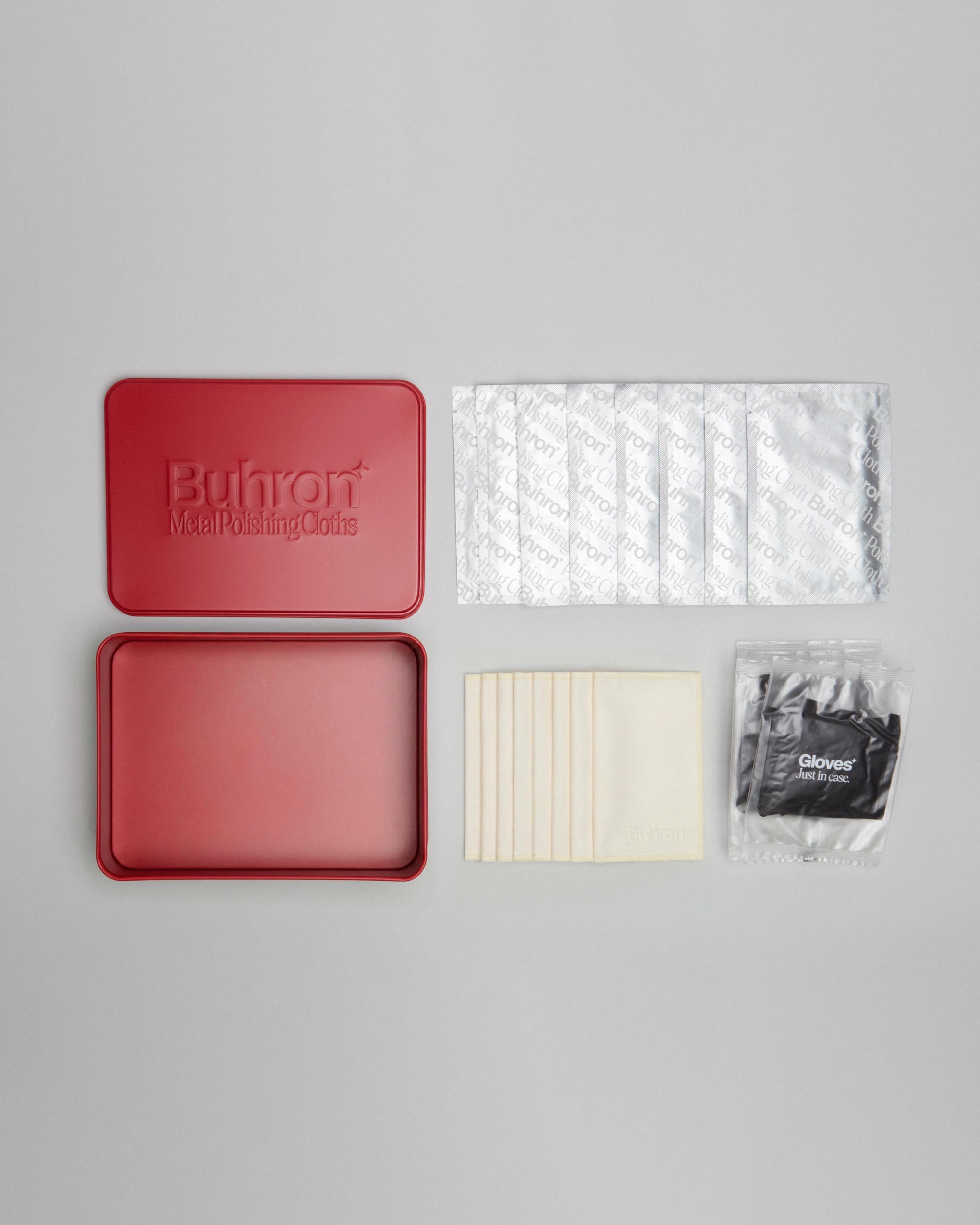
The jewellery polishing cloth is treated with a proprietary polishing compound developed over five years. It's non-toxic, safe for skin, safe for your metals, and works in two stages. The first cloth does the active work, it removes fine scratches and tarnish on contact. The cloth darkens as it works, that's normal. The second cloth is a microfibre finishing cloth. It buffs the remaining polish film to a high-gloss mirror finish. That step is what restores the surface completely.
For surface scratches and tarnish on pieces you wear regularly, yes. A jeweller's polishing wheel produces excellent results, but it removes a significant layer of metal every time. For a ring you wear every day and bring in regularly, that adds up over years. The Buhron jewellery polishing cloth removes far less material, does not generate heat, and offers very delicate control if sharp edges are important and deformation is a concern. For everyday pieces, Buhron would be the best jewellery cleaner approach.