Wear a gold ring every day for a year and the surface turns into a dull web of fine lines. The gold is still there. What's changed is the surface, and that's something you can fix at home.
Is It Normal for Gold Jewelry to Have Scratches?
Yes, completely. Gold ring scratches are not a defect or a sign of poor quality. They're a consequence of what gold is as a material. Pure gold rates 2.5 on the Mohs hardness scale, softer than a copper coin at 3, softer than glass at 5.5, and nowhere near the hardness of a diamond. Most surfaces you come into contact with daily are significantly harder than the ring on your finger. And that's why gold appears so scratched so fast. Silver sits just above gold on the scale — it's harder, but not by enough to matter in daily wear. Stainless steel jewellery sits much higher on that scale and scratches far more slowly, though even polished steel dulls eventually.
Six thousand years later, the problem is the same. What's better understood now is the physics behind it, which changes how you approach fixing it.
Before:
After:
Why Does Gold Scratch So Easily?
Two things are working against you: the softness of gold, and the way metal actually responds to abrasion.
When something harder than your ring drags across the surface, the metal doesn't shear off (most of the times). It gets pushed sideways, and this looks like a scratch to our eyes. Gold ring scratches look dull rather than thin because you're seeing scattered light off irregular micro-ridges, not missing metal. Polishing works for the same reason: you're levelling those ridges back down to a consistent plane.
But this needs to be done extremely controlled, since gold is so soft, and therefore fragile. Don't use a standard cheap polish on gold (and silver).
Karat plays a large role too. The higher the karat, the more pure gold in the alloy, and the softer the metal. Jewellers have always mixed gold with copper, silver, zinc, and palladium to increase hardness. A lower-karat ring like 14 of 11kt scratches more slowly because there's more alloy in it. A higher-karat ring has more gold, looks richer, and picks up surface marks faster.
How Easily Does 18k Gold Scratch?
Quickly, under daily conditions. 18k gold sits at around 3 on the Mohs scale, and a mirror-polished 18k ring typically starts looking dull within 3 months of everyday wear. This is normal. But unfortunate.
18k gold ring scratches are most visible on the outer face of the shank and on the underside where the ring contacts hard surfaces throughout the day. European luxury jewellery from Cartier, Van Cleef, and Bulgari is almost always 18k. These pieces scratch faster than a 14k ring. That's a deliberate choice for colour richness and purity, not a sign of lower quality. 18k is more expensive, and warmer than 14k. It's just slightly different.
Does 14k Gold Scratch Easily?
Less easily than 18k. 14k gold sits closer to 3.5 on the Mohs scale because it contains more alloying metals relative to gold content. A well-maintained 14k ring typically holds a mirror polish slightly longer before the surface starts dulling noticeably. 14k gold ring scratches accumulate more slowly and tend to be shallower when they do appear.
Gold Wedding Ring Scratches and Engagement Rings
Gold wedding ring scratches are among the most common jewellery concerns people look into, and the reason is obvious: wedding rings go on and often don't come off. Worn every day, all day, for years. The surface accumulates wear faster than any other piece of jewellery most people own. (A silver necklace worn daily builds the same dullness — different metal, same physics.)
Gold engagement ring scratches tend to show up earlier than expected, sometimes within weeks of daily wear, because engagement rings are frequently 18k and often have a high mirror polish that makes any surface change immediately visible. A matte or brushed finish disguises early wear better, for those who'd rather not see every mark.
Buhron works extremely well on these plain wedding bands, they are very satisfying to restore. A pro tip: cover your table, put the cloth on a flat surface, and rub the ring over the cloth, in different sections.
What a Professional Polish Actually Does to Your Ring
When a bench jeweller polishes a ring, they work it against a wheel spinning at around 2400 RPM. For a scratched surface, the first stage uses tripoli (a mild silica-based cutting compound) on a stiff wheel, which removes a thin layer of metal to level the surface. Then they switch to a softer wheel loaded with a fine iron oxide compound used for surface finishing, to bring the mirror finish up.
The results look impressive because metal is being removed every time. Microns per session, but permanently. It isn't an argument against professional polishing when it's needed. It is a reason not to treat it as routine maintenance for scratches that a cloth can handle.
A polishing cloth works at a finer scale, requires more effort from you, and doesn't take metal off the ring in any meaningful amount.
Can You Get Scratches Out of a Gold Ring at Home?
Yes, for the vast majority of gold ring scratches that come from daily wear. What a polishing cloth won't address is deep gouging from impact, or structural problems like loose stones, bent prongs, or a thinned shank. Surface scratches, which is what most people are dealing with, respond well to a proper two-step polishing cloth.
The process is simple. A ring with a year of accumulated gold ring scratches needs roughly 5-10 minutes of consistent pressure on the polishing cloth. Not a few quick passes.
How to Polish a Gold Ring at Home
Cover your work surface before you start. The compound is slightly greasy and will mark fabric or wood.
Step 1: Polishing Cloth. Work the polishing cloth over the scratched areas with firm, consistent strokes, following the contour of the band. The surface will look dull and slightly oily as you go. For a ring with typical annual wear, 5 to 12 minutes is realistic. Don't cut it short.
Step 2: microfibre buff. Switch to the clean buffing cloth. Work over the same areas to lift the compound residue and bring the shine through. The improvement is visible within the first few passes. But also give this a few minutes of elbow sweat.
Step 3: rinse. Warm water with a small drop of dish soap, then pat dry with a lint-free cloth.
On most rings with standard daily-wear scratches the result is significant. A surface that's been scattering light in every direction goes back to reflecting it consistently, and the visual difference is larger than most people expect before they try it.
Gold Jewellery Care Over Time
Staying on top of it is easier than catching up. A light polish every few months of daily wear keeps gold ring scratches from building into something that takes serious time to address. Shallow scratches take a fraction of the effort that a year's accumulation does.
Store gold rings separately from harder materials. A diamond, a sapphire, or another metal ring sitting in contact with your gold band during storage will scratch it. A ring dish or compartmented jewellery box solves this completely.
Take the ring off before anything with weight training, gardening, building work. It's about knowing which environments generate the deepest gold ring scratches in the least time, and deciding whether it's worth it.
When to Go to a Jeweller
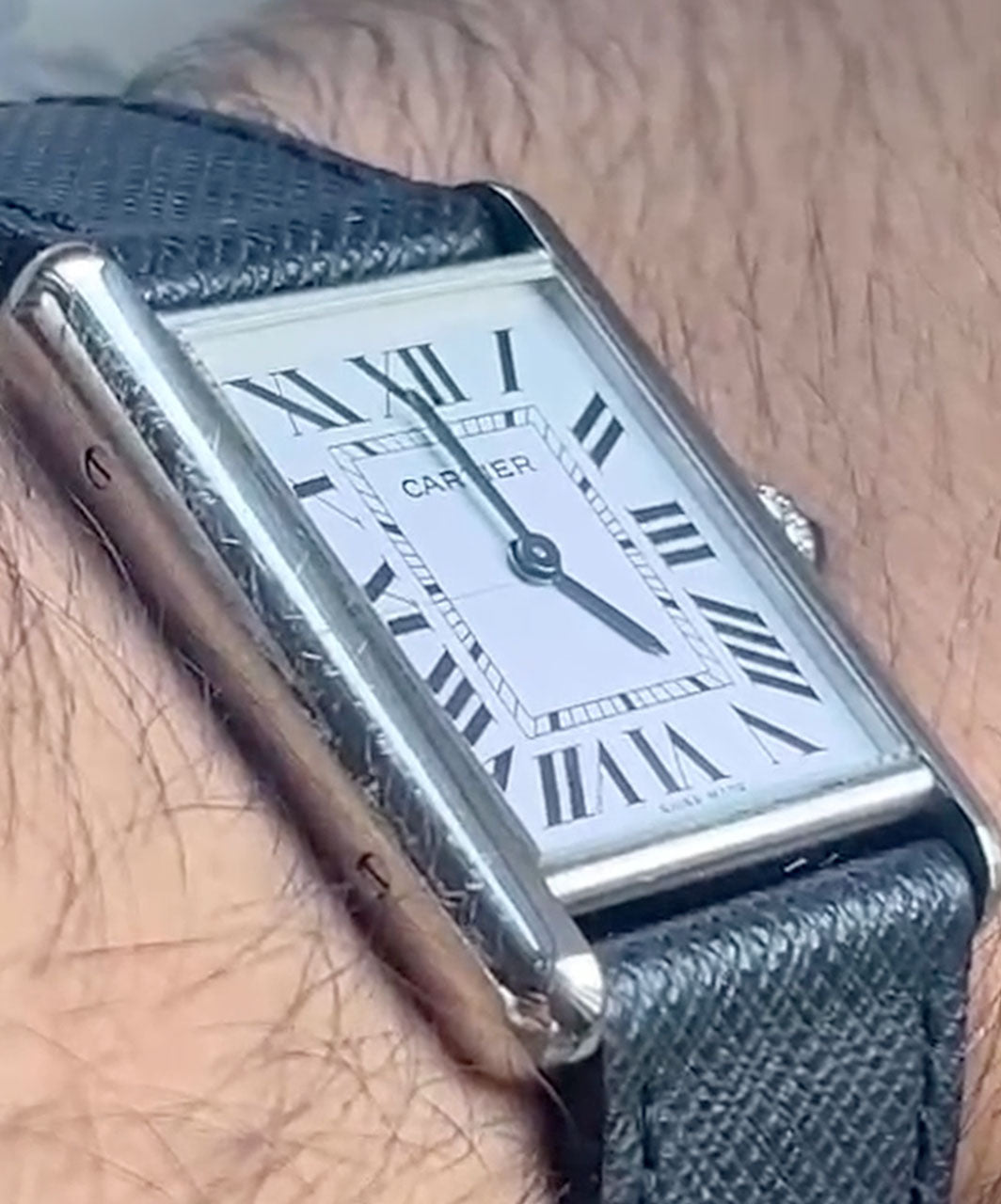
A polishing cloth covers surface scratches from daily wear, which is most of what people are dealing with. It won't fix everything. (The same principle applies to watches: hand polishing protects the geometry, a machine changes it.)
Deep gouges from impact need a professional wheel. Loose stones or visibly bent prongs need immediate attention; stop wearing the ring until it's been checked. White gold showing the yellow base alloy through the rhodium needs professional re-plating. If your ring has engraved text, use minimum pressure and minimum passes, as polishing will soften inscriptions over time.
If it looks like a fine scratch, a polishing cloth for gold jewelry will address it. If it looks like damage, take it in.
The Buhron System
Buhron polishing cloths follow the same method that bench jewellers have used for centuries, built for home use without significant material removal. The microfibre finishing cloth removes residue and brings up a consistent mirror finish.
The two-step chemistry is documented in detail in our surface science research, including independent XPS analysis from the Fraunhofer Institute that shows how scratch removal and passive layer restoration work at the nanoscale.
The physics are the same ones goldsmiths have been working with for six thousand years. Just with 5 years of modern material science optimisation.
Shop the Buhron polishing cloth