

Watch polishing is a sensitive subject in the community. If you want to know how to polish a stainless steel watch at home without damaging it, the answer starts with understanding why so many watches get damaged in the first place. The problem is almost never the scratches. It is what happens when someone tries to 'fix' it with a buffing machine and does not know what they're doing. And that's a lot of people..
The gloss on a polished watch case has a name in high watchmaking: poli noir, specular polishing. Literally, black polish. The name comes from the optical effect. When done correctly, the surface is so reflective that it appears almost black, when you see it in the right light. Cartier, Patek Philippe, Audemars Piguet, amongst others, are famous of delivering this specific surface quality.
The technique was given a name in the early 19th century. Peter Daniel Peres (1776 to 1845) is credited with formalising 'Schwarzpolitur', the German name for the same process, as far back as 1801 (documented in Geschichtsblätter für Technik, Industrie und Gewerbe (1918, p. 205)). The tradition is over two centuries old, but still referred to on watch forums, reddit, literature and more.
The technical measure of the finish is Ra, and mean 'surface roughness', expressed in microns. A factory-polished watch case typically sits between Ra 0.02 and 0.05 microns. Gloss units (GU) are measured separately with a glossmeter at 60 degrees and describe how the surface reflects light optically. A true mirror finish reads 90 GU or above and is properly measured with a combination of at least 2 techniques.
When fine surface scratches accumulate from daily wear, the Ra rises and the GU falls with it. The surface that used to look shiny now looks grey and flat. Read more on our research here.
A professional polishing wheel runs at approximately 1400-2,800 RPM. Material removal from polished stainless steel at that speed is typically 2 to 10 microns per pass, depending on the compound.
The problem is not the removal itself. It's how much and where it happens. Watch polishing is really a skill, so if done incorrectly with a machine it contacts both faces of an edge simultaneously and cuts corners, because corners are the highest contact points and receive the most cutting action. You see dozens of topics about this online, on rolex lugs, bezels, and more. All 'overpolished'. Collectors on vintage forums measure lug width to 0.01mm for exactly this reason.
Rounded lug tips. Softened corners. Case flanks that should be flat but have become slightly rounded. These changes are permanent and once the original geometry is gone, it cannot be restored at home, and in many cases not at all without removing further material from the case.
The wheel also generates heat. A case can reach 40 to 60 degrees Celsius under sustained friction at 15 metres per second. One of the reasons watchmakers (should) always remove the movement before any professional case polishing.
The concern with collectors is valid.
When you polish a stainless steel watch by hand, the pressure applied is typically between 0.2 and 0.5 kg per square centimetre. You feel every surface. You feel when you reach a corner and you stop there. You can take your time, and inspect often. It's much less aggressive, and doesn't produce heat at all. So your movement can stay in without issues. Just make sure to NOT USE IT ON BRUSHED FINISHES, only on the parts that should be shiny. Just making sure.
The formulation took five years because the compound needed to be aggressive enough to address a 1 micron scratch and gentle enough not to introduce new surface damage in the process. Most products available solve one of those two requirements or neither. The finishing cloth removes the polishing film and brings the surface to mirror. Both steps are necessary and neither replaces the other.
Our AFM measurements confirmed the Ra range of the original factory finish after treatment. SEM measurements were also taken while developing the formula, to confirm the balance between scratch removal and shine at an extremely small level.
The watch in this video belongs to a customer of ours. A stainless steel Cartier Tank, bought new and worn every day for one year. Already covered in fine surface scratches across the case and bracelet. He polished it at home with the Buhron cloth.
Stainless steel Cartier Tank. One year of daily wear. Polished by hand.
The case and bracelet were cleaned first. The brushed backside was taped off, just in case. The polished surfaces were treated with the first cloth for a few minutes with firm pressure, followed by the finishing cloth buffing out the remaining polish. The movement stayed in the case throughout. The geometry of the case is virtually unchanged.
The first step when you polish a stainless steel watch is understanding which surfaces you can work on and which you cannot. Most watch cases combine two surface treatments. Polish only the polished surfaces. Apply the cloth to a brushed or satin area and you will start converting it toward mirror. That change cannot be reversed at home (not for brushed finishes).
The Cartier Tank is almost entirely mirror polished with no brushed surfaces, which is one reason it works well as a demonstration piece.
Clean your watch first, between the lugs, creases. These areas collect potential debris. Rinse and dry completely before the cloth goes anywhere near the steel. Before using Buhron your watch needs to be water-free and dry.
Work in straight strokes, and if possible, circular. Even pressure, stainless steel is relatively hard, so you could be firm here. 10 minutes for normal daily wear, a few more for older scratches. Repeat as needed.
Case first, then the bracelet. If you also want to polish your bracelet, make sure that any brushed surfaces are masked, and you're only polishing the shiny parts. Be patient, more time means a better result overall.
Yes, if a buffing wheel changes the case geometry. No, if surface scratches are removed without altering the lug profile, corner sharpness, or case dimensions.
The collector community is right about wheel polishing. A cloth works on the other side of that problem, and is much less aggressive. (On jewellery — silver rings, gold bands — the same distinction applies. A cloth used by hand removes a fraction of what a professional machine takes off.)
For a vintage piece where the original surface condition carries value, think about it. A cloth is still a polishing tool and any polishing on a collector watch deserves careful thought. We are watch lovers too, but thought there should be a solid option with near professional results if you decide to go ahead.
Toothpaste. The abrasives in toothpaste are designed for acrylic and enamel, not steel. The particle size is inconsistent and the paste is difficult to fully clear from bracelet link gaps.
WD-40?! WD-40 fills surface scratches with an oily film that evaporates within days. The scratches come back and the surface is harder to clean properly afterward.
Baking soda. Too coarse for polished steel. You will add scratches in the process of trying to remove them.
Other polishing cloths. We've tried them all, and compared them in quantitative tests, until Buhron outperformed all solutions (by quite a lot). Other cloths are always a trade off of performance vs finish.
Those are the things to know before you polish a stainless steel watch at home. Clean it first. Understand your surfaces. Work in straight strokes. The movement stays in.
Also working on jewellery? The hand-polishing logic is the same, but softer metals behave differently: gold shows scratches faster than almost anything, and silver benefits from a second pass once the first reveals what's still underneath. For stainless steel bracelets, rings and pendants, the method stays closest to what you just read — I’ve written it out in how to polish stainless steel jewellery at home.
Shop the Buhron polishing cloth
Works on polished stainless steel, gold, silver, platinum, brass, and copper. Polished surfaces only. Not for brushed, satin, or plated finishes. The movement can remain in the case during treatment.
Sources and further reading
Peter Daniel Peres (1776 to 1845) and the origin of Schwarzpolitur in 1801. Geschichtsblätter für Technik, Industrie und Gewerbe, 1918, p. 205.
Technical guidance on polishing rouge grades and abrasive selection. Deutsche Uhrmacher-Zeitung, Vol. 15, p. 118. Säurehaltiges Polirroth and Das Schlemmen des Schmirgels.
Rebecca Struthers. Watchmaking (English) and Uhrwerke (German), 2024. On the optical properties and tradition of Schwarzpolitur in haute horlogerie.
Henrik Korpela, K&H Watchmaking Competence Centre, Le Locle, Switzerland. On the practical technique of flat polishing on a tin plate using diamantine. Documented in SJX Watches, 2015.
Alexander Babel, Artifex Babel Workshop. On the distinction between diamantine (aluminium oxide) and diamond paste in the Schwarzpolitur process.
Read more
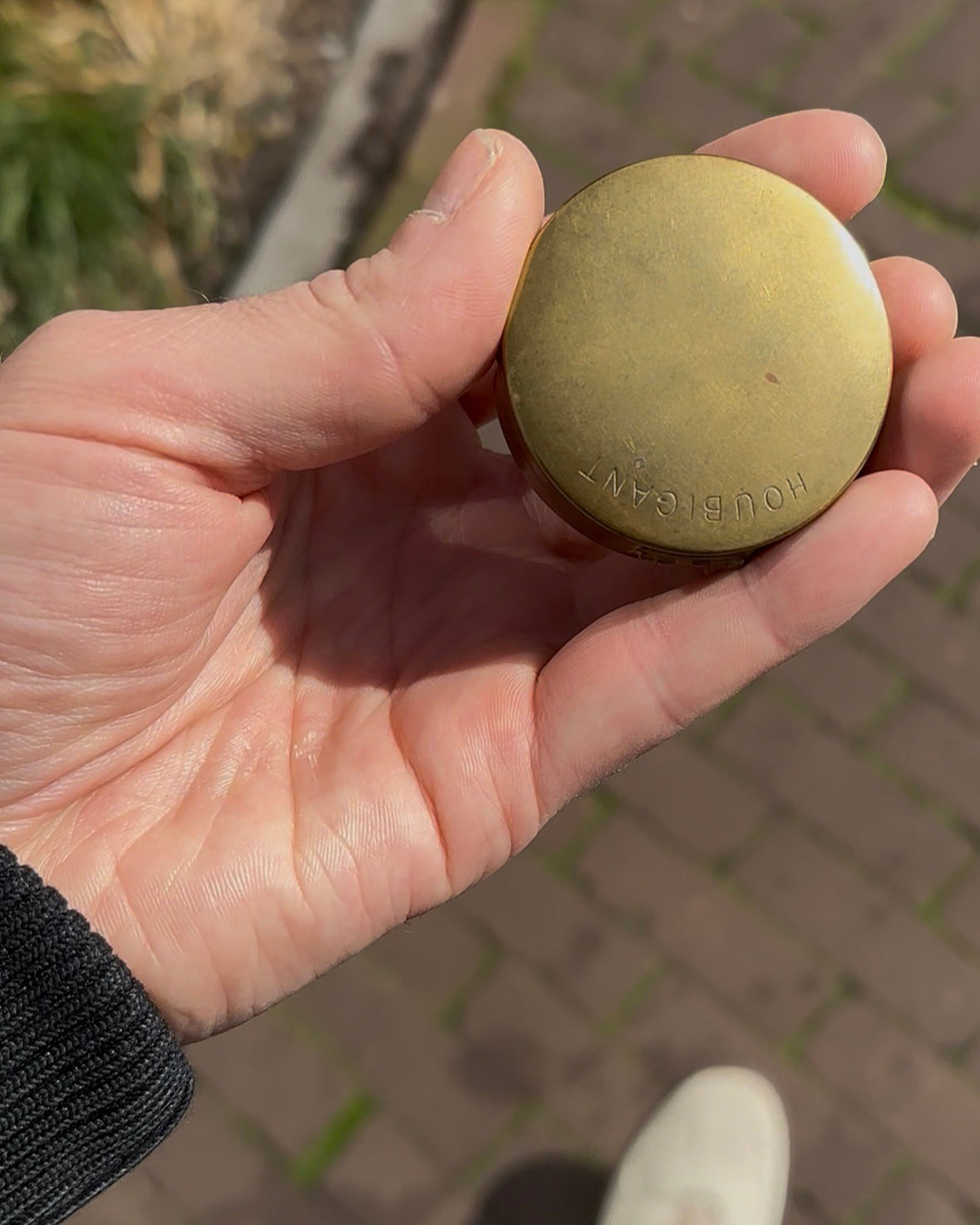
Story Here's what happened when I tried to make It look new. A small brass powder compact, no idea how old. The kind of thing that's clearly been beautiful and currently looks like it hasn't been ...
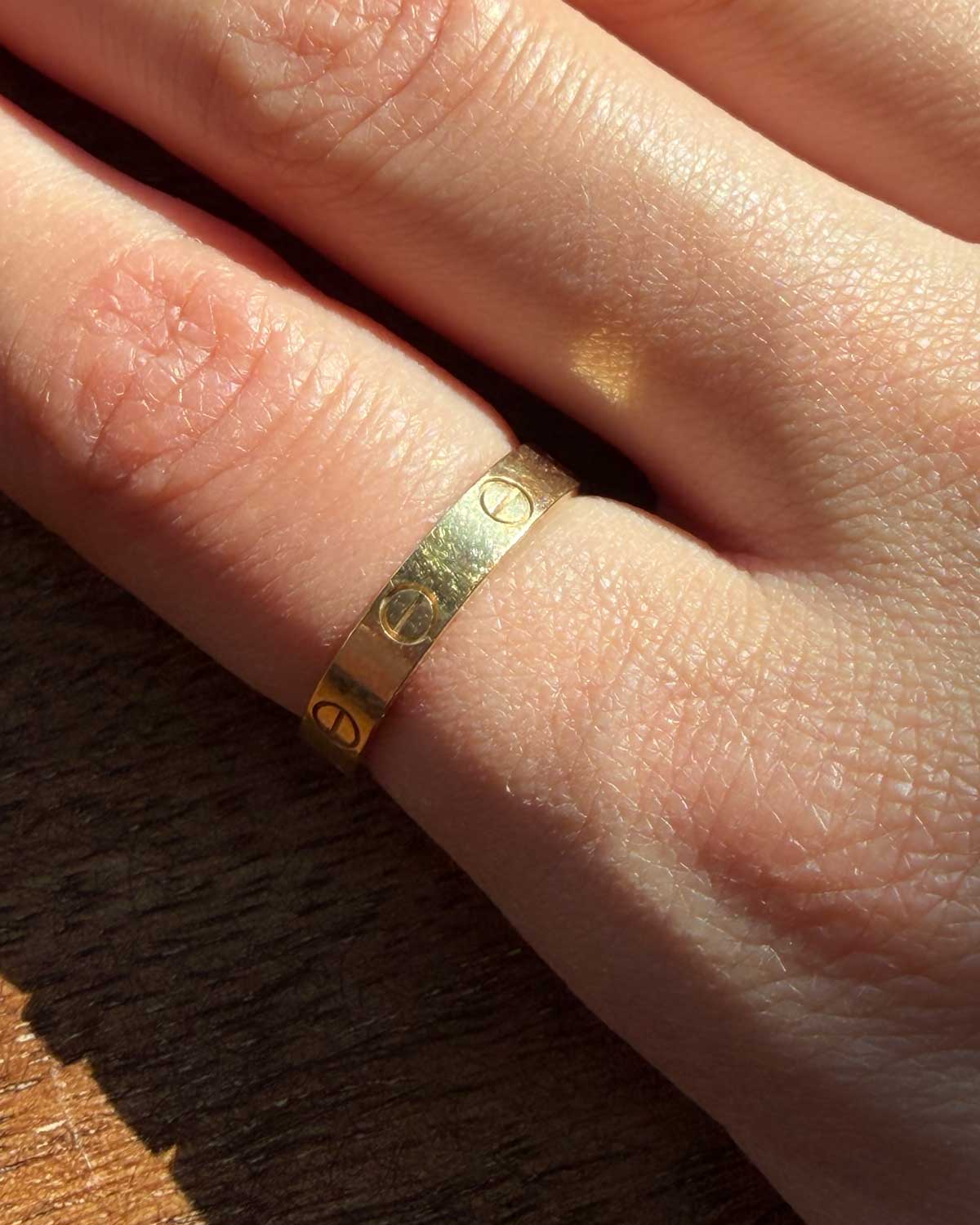
Wear a gold ring every day for a year and the surface turns into a dull web of fine lines. The gold is still there. What's changed is the surface, and that's something you can fix at home. Is It ...